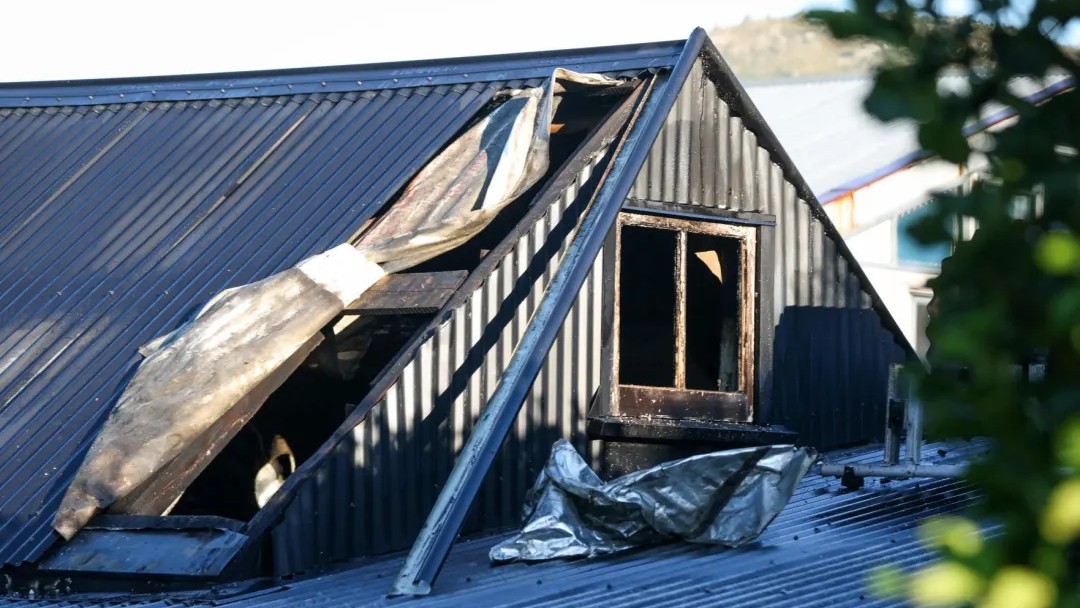
The Shroom Room co-owners Richard Leech and Koryn Hope are facing the loss of a well-known Lyttelton cafe after a Sunday night fire tore through the London Street business and left the building gutted. Firefighters were called shortly before 8pm, with smoke visible above the port town near Christchurch. Leech said the fire appeared to have started in the front-of-house area, although no one was inside at the time. He and Hope were away in Abel Tasman when the fire broke out and were returning to Christchurch to assess the damage.
The story matters beyond one damaged building because small hospitality businesses often carry a town's daily rhythm. The Shroom Room is a local cafe, a workplace, a customer habit and part of the street-level economy around Albion Square. When Leech said the loss was devastating for staff, customers and the owners, he was describing the layered impact of a fire in a small commercial centre. The immediate facts are simple: the cafe was heavily damaged, nobody was reported inside, and Fire and Emergency staff attended the scene. The consequences are more complicated.
For a founder or owner-operator, a fire can stop income in one evening while leaving wages, insurance, suppliers, leases, equipment decisions and customer communication to be handled in the days that follow. Even when insurance responds, the business may face delays while investigators establish cause, builders assess structure, and owners decide whether to rebuild, relocate or pause. A kitchen, front counter, coffee equipment, stock and fitout are not easily replaced overnight. In hospitality, the cost is also reputational and emotional, because customers build attachments to familiar places.
Neighbouring businesses are part of the equation too. Leech understood there had been smoke damage to a nearby bookshop, though not structural damage. That kind of spillover shows why commercial fires are a community issue. A blaze in one tenancy can affect the foot traffic, safety, smell, access and trading conditions around it. Lyttelton's centre is compact, so disruption in one visible site is noticed quickly by residents and visitors.
The public response should leave room for caution. Fire cause and liability should not be guessed at while official inquiries continue. What is clear is that the owners, staff and surrounding community now face a recovery process. Customers who want to help will need to wait for clear instructions from the business rather than making assumptions about what is useful. In many cases, practical support later, when owners know their insurance position and reopening options, matters more than sympathy on day one.
The Shroom Room fire is therefore both a business story and a regional story. It is about the fragility of small-town hospitality and the speed with which a familiar place can be taken out of daily life. Leech and Hope now have to move from shock to logistics. Lyttelton will be watching whether one of its known cafe spaces can return, and what support a local operator needs to rebuild after a sudden loss.