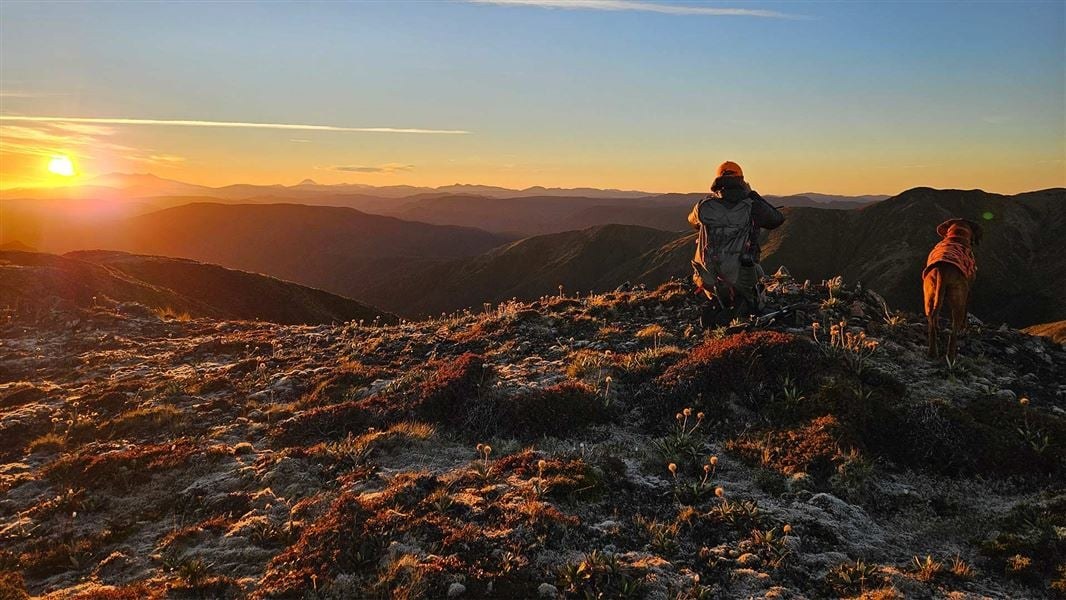
Hunting and Fishing Minister James Meager has opened the 2026 National Wild Goat Hunting Competition, calling on hunters and landowners to help reduce damage to native bush, farms and forestry.
Government and Department of Conservation material dated 1 August says this year's competition runs from 1 August to 26 November. The Government says the competition has contributed to the removal of more than 33,000 wild goats since it launched in 2023. Hunters do not need to register before hunting, but they must hunt safely, legally and ethically, hold the necessary permits or landowner permission, and take eligible goat heads or tails to official entry locations.
This is an agriculture and conservation story because wild goats sit across both worlds. They can damage native bush and ecosystems, but they also affect farms, forestry blocks and landowners trying to manage pasture, erosion and vegetation. Meager said unmanaged wild goats do serious damage and described the competition as an example of hunter-led conservation.
DOC frames the competition around giving back to the landscape, saying every eligible hunt contributes to reducing pressure on New Zealand's landscapes and ecosystems. It also encourages wider nature care, including predator trapping, wilding pine removal and cleaning gear to avoid spreading weeds. That broader message matters because goat control is not a stand-alone fix. It is one part of practical land stewardship.
The numbers show the competition is no longer a novelty. Some 863 people participated last year, including 211 hunters under 18. Meager also said 75 percent of previous entrants reported they were more likely to hunt wild goats because of the event. If accurate, that suggests the competition is changing behaviour, not only rewarding people who would have hunted anyway.
There is a rural partnership element. Landowners can register interest and be connected with vetted New Zealand Deerstalkers Association members who hold public liability insurance, use standard access agreements and prioritise safety and respectful land use. That matters because access is often the practical barrier.
The competition also has to be careful about animal welfare and firearms safety. Entered goats must be wild and taken legally, recreationally and humanely during the competition period. Firearms users must have a current licence or be supervised by an appropriately licensed person. Those rules are not administrative details. A public competition can only maintain legitimacy if safety, legality and humane practice are non-negotiable.
For farming communities, wild goat control can reduce browsing pressure on pasture, young trees and native regeneration. For conservation groups, it can help protect habitats where goats strip vegetation and prevent recovery. For young hunters, the competition can be an entry point into responsible hunting if older hunters, branches and landowners model the right behaviour.
There are limits. A competition running for a few months cannot replace year-round pest-management planning, professional control where needed, or long-term monitoring. Goat populations can recover if pressure drops, and rugged country can hide animals from casual effort. The best outcome is not a one-off tally but stronger ongoing relationships between hunters, landowners, DOC and local communities.
The 2026 competition gives that work a visible national moment. If it keeps safety and landowner trust at the centre, it can turn a weekend hunting activity into practical help for farms, forestry blocks and native landscapes.