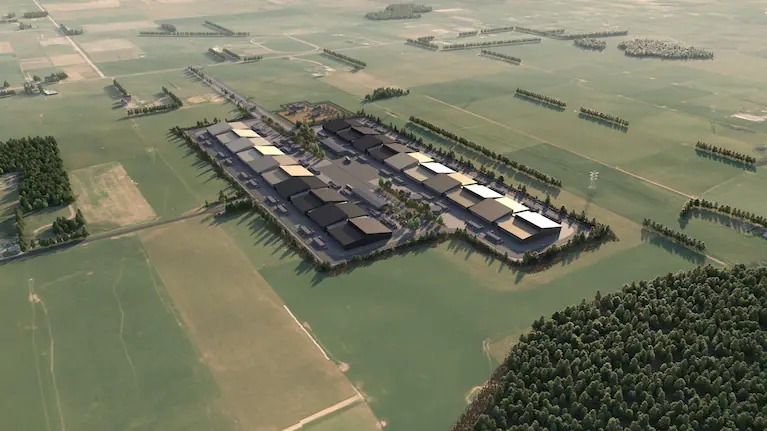
Prime Minister Christopher Luxon says the Government is working on common-sense rules for large data centre operators, after the proposed $3.5 billion Datagrid development at Makarewa pushed the national debate over artificial intelligence infrastructure into sharper political focus.
1News reported on Monday evening that Luxon had directed Economic Growth Minister Nicola Willis and the Department of the Prime Minister and Cabinet to develop a set of principles for hyperscale data centre operators. The Ministry of Business, Innovation and Employment has also been engaged. Luxon said large facilities would need to bring additional power generation if they wanted to build in New Zealand, framing the work as a compact for companies seeking to develop major data centre projects here.
The immediate pressure comes from Southland. The Makarewa project has already been approved, sits about 10 minutes north of Invercargill and has prompted questions from people living near the site. The Guardian reported earlier this month that Singapore-based Datagrid had secured approval for a 49-hectare AI data centre campus, with construction due to begin this year and operations planned for 2028. That report said the facility would be used for AI training, processing and data storage, and would also connect with a planned high-speed cable between Invercargill and Australia.
The numbers explain why the issue has moved from local planning into national politics. The Guardian reported that the Makarewa centre would use 280 megawatts of electricity, making it New Zealand's second-largest electricity user after the nearby Tiwai Point aluminium smelter. It also reported company estimates of about 1,200 construction jobs and about 50 permanent roles once complete. Supporters see foreign investment, digital infrastructure and regional work. Critics see heavy power demand, water questions, noise, light, diesel back-up generation and limited long-term local employment.
The Green Party has called for a one-year moratorium on consenting new large-scale AI data centres, arguing that communities need stronger protections before major projects are locked in. Luxon rejected that as alarmist, but his decision to develop a compact shows the Government accepts the sector needs clearer rules. The question is whether those rules arrive before public confidence is lost.
For New Zealand, data centres are not just technology buildings. They are energy, water, land-use, foreign-investment and regional-development decisions bundled into one planning fight. A centre can look attractive in a national growth strategy while still creating practical pressure for the community next door.
The policy test should therefore be concrete. Operators should have to show where power comes from, how much water is needed, how back-up generation will work, what noise and light controls apply, what jobs remain after construction and what benefits the host region can actually measure. If New Zealand wants AI infrastructure, the public needs more than slogans about innovation. It needs rules that make the trade-offs visible before consents, construction and contracts make them difficult to change.
The next step should be public enough for councils and residents to use. A compact that only guides ministers internally will not answer Makarewa's questions. A compact that gives councils a checklist for energy, water, jobs, emergency generation and community consultation would be more useful, because it would turn a national ambition into standards that can be tested at the site gate.