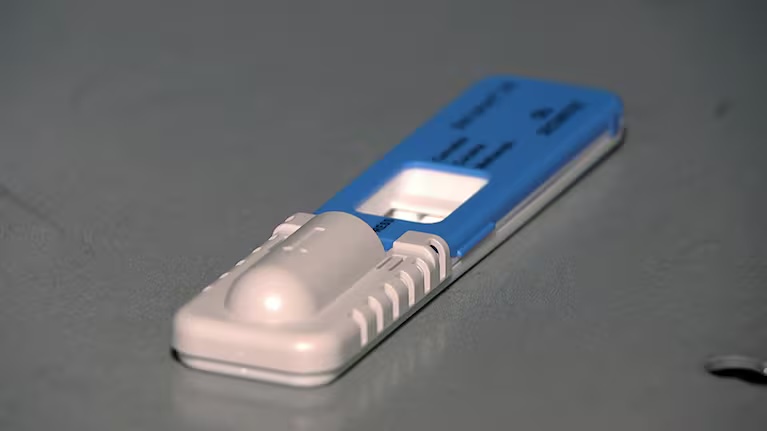
New Zealand drivers are about to see a new roadside enforcement regime, with police preparing to begin nationwide oral-fluid drug testing from Wednesday, July 1. The rollout is a transport policy story because it changes what can happen during an ordinary traffic stop. Police will be able to screen drivers for recent use of cannabis, methamphetamine, MDMA and cocaine with a tongue swab. If the first screening test is negative, the driver can leave. If it is positive, the driver can be required to provide a second saliva sample for laboratory testing, while a third roadside screen is used to help check the first result.
The government has framed the programme around road safety. Transport Minister Chris Bishop and Police Minister Mark Mitchell have linked drug-impaired driving to death and serious injury on New Zealand roads. The public-interest question now is how the system works in practice: how quickly tests are administered, how clearly drivers understand their rights and obligations, and how consistently police apply the regime once it moves beyond the Wellington pilot. The Wellington pilot began in December and involved about 3000 tests, with roughly 100 positive results. The national target is about 50,000 tests a year.
That figure is not enormous compared with the number of vehicles on the road, so the deterrent effect will depend on visibility and targeted enforcement as much as raw testing volume. Drivers who know the tests can occur anywhere may change behaviour even if they are unlikely to be stopped on a particular trip. The penalties are also designed to be immediate enough to matter. A positive roadside sequence can trigger a 12-hour suspension, with police seizing keys and usually arranging for the person to get home. If the laboratory test later confirms a single drug, the driver faces a $250 fine and 50 demerit points. Two or more drugs can mean a $400 fine and 75 demerit points. Refusing a test attracts the higher penalty tier.
Those details make the scheme different from a general anti-drug message. It is a compliance system with a roadside process, a laboratory process and a delayed infringement process. That creates responsibilities for police and for government agencies. Public information will need to be plain enough that drivers understand why a saliva sample is being taken, what happens if the screen is positive, and when a final penalty is confirmed. There will also be scrutiny of false positives, medicine use and fairness. Oral-fluid testing is aimed at recent drug use, not simply historic exposure, but any roadside screening tool needs strong procedures around confirmation.
For employers, sports clubs and families, the message is immediate. The July 1 start gives only a short window to update workplace vehicle policies, talk to young drivers and make sure people do not assume drug-driving enforcement is only a holiday-period campaign. It is becoming part of everyday road policing. The regime will not answer every road-safety problem. Speed, alcohol, distraction, fatigue and road design remain major issues. But the drug-testing rollout gives police a specific tool for a risk that ministers say has been under-enforced. Its success will depend on whether the first months show a visible, fair and accurate system, not just a tough headline.