Work on the new Waikare Gorge bridge is more than another road project for the East Coast. It is a test of whether cyclone recovery can be turned into infrastructure that lasts longer than the emergency repair.
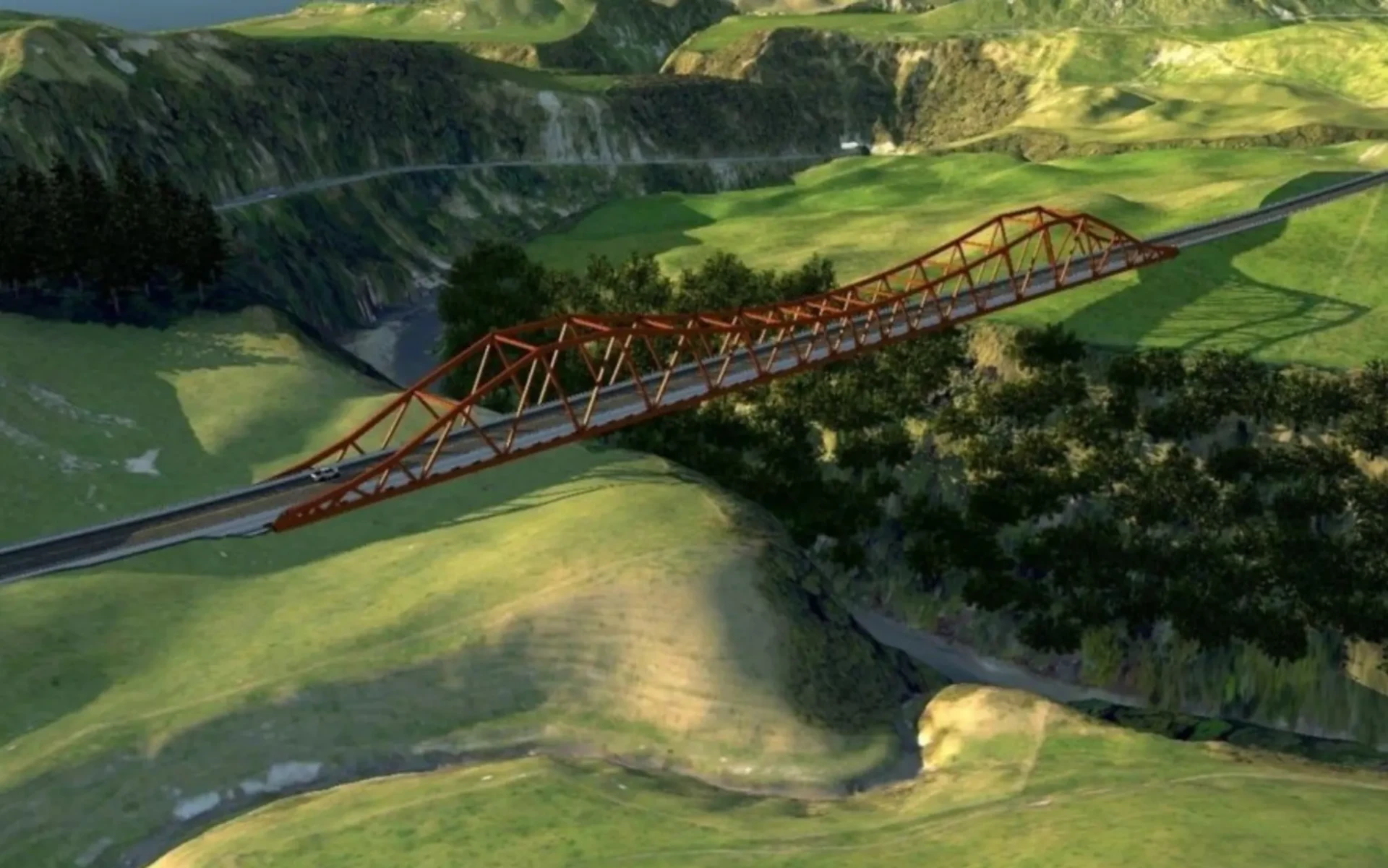
The first sod has now been turned on the State Highway 2 crossing between Napier and Wairoa. The planned bridge would run about 260 metres across the gorge and sit roughly 65 metres above the river, making it New Zealand's highest road bridge once completed. It would replace the temporary one-lane Bailey bridge installed after Cyclone Gabrielle destroyed the old crossing in 2023.
That temporary bridge kept the route alive, but it also showed the limits of making do. State Highway 2 is a freight, work, health, school and visitor route as much as it is a line on a transport map. For Wairoa, Hawke's Bay and communities further up the East Coast, a fragile crossing can become a daily economic risk.
The new build is expected to take up to four years, although transport officials have suggested the construction team may be able to shorten that timetable. The cost range has also shifted down from earlier estimates, with the project now presented as a $275 million to $325 million job after design changes, tender pricing and risk work.
The regional case is clear. Local leaders have pointed to forestry, apples, meat processing, freight and everyday travel as reasons the bridge matters. A more reliable crossing should make trips between Wairoa, Napier, Gisborne and the wider East Coast smoother and safer.
The local cost is also real. The realigned road runs through private farmland, and affected landowners will live with years of construction disruption. One nearby dairy farmer has described the route as cutting through productive pasture and forcing changes to how the farm operates. That does not cancel the public benefit, but it is a reminder that resilience projects still land on specific properties and households.
For the region, the strongest argument for the bridge is not height or spectacle. It is continuity. Cyclone Gabrielle exposed how quickly transport links can fail and how widely the damage spreads when they do. The Waikare Gorge project is now being judged on whether it can give the East Coast a crossing that is less vulnerable, better suited to freight and safer for the long haul.
The sod-turning marks the start. The next four years will show whether the replacement bridge can carry more than traffic; it has to carry public confidence that recovery money is building something durable.