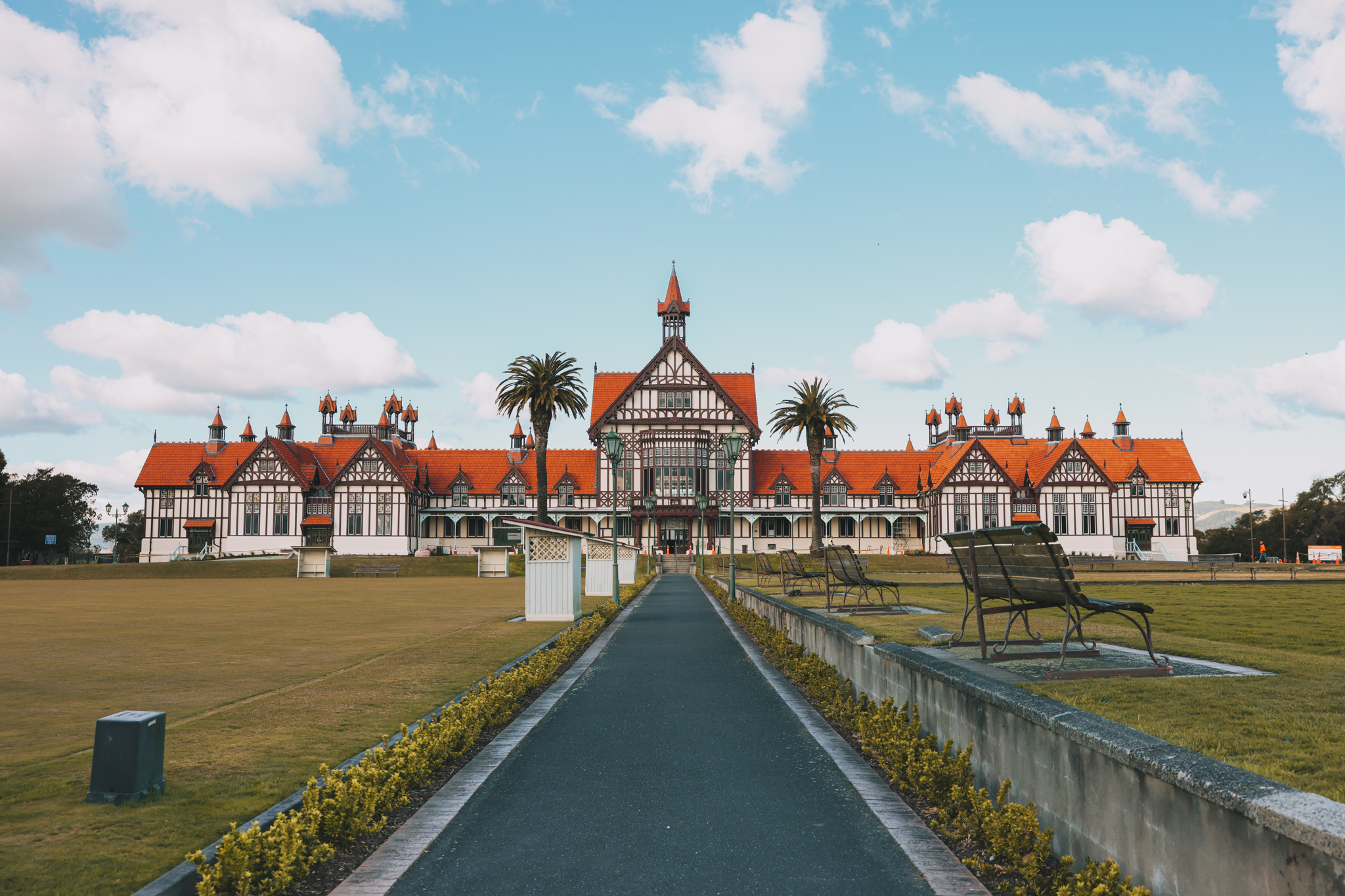
Rotorua Museum Te Whare Taonga o Te Arawa has been formally blessed after major restoration and strengthening work, marking a shift from construction site back toward public taonga as the city works toward reopening in 2028.
The historic Bath House building has been closed since November 2016 because of earthquake safety concerns. Construction began in June 2024, and Rotorua Lakes Council says the complex restoration and strengthening works are now complete. A karakia was held at the building to restore its mauri and formally awaken it after nearly two years of construction "sleep".
The language around the reopening matters. This is not simply a building project. The museum is a civic landmark, a heritage asset, a tourism draw and a cultural repository connected to Te Arawa stories and Rotorua's identity. Its closure has left a gap in the city centre for almost a decade, and the restoration has carried expectations well beyond standard infrastructure delivery.
Regional Development Minister Shane Jones used the ceremony to announce $2 million from the Government's Regional Infrastructure Fund for the museum's exhibition project. That money is intended to support the next phase of work, giving the city more certainty as the building moves from structural restoration toward the visitor experience that will eventually reopen to the public.
Mayor Tania Tapsell says the announcement is significant for Rotorua and reduces the financial burden on ratepayers. She says more than 300 people contributed to the project over 110 weeks on site, bringing a wide range of skills, expertise and craftsmanship to a difficult job.
The difficulty should not be understated. Restoring and strengthening a 120-year-old building in an active geothermal environment is a technical and financial challenge. Heritage buildings can be unforgiving, especially when seismic strengthening, conservation standards, modern visitor expectations and construction risk all meet in the same structure.
The project also highlights a wider issue for regional New Zealand: important heritage places are expensive to keep, but the cost of losing them can be larger than the repair bill. Rotorua's museum is part of the city's public memory. It gives shape to local stories, civic pride, tourism itineraries and the way visitors understand the place they are entering.
The next stage will be judged by content as much as construction. The council says future exhibitions will be shaped by engagement with Rotorua communities, iwi and Te Arawa, reflecting the stories, people and places that make Rotorua unique. That is the right test. A restored building without a strong local story would be a missed opportunity.
For central Rotorua, the museum's return could help anchor a broader civic and visitor renewal. A reopened museum gives schools, residents, tourists and cultural groups a focal point that has been absent for years. It may also help nearby businesses by bringing more foot traffic back to a landmark site.
There is still work ahead before the doors open. Exhibitions have to be completed, operational planning has to be settled, and the public experience has to match the years of patience the community has shown. But the blessing and funding announcement move the project into a different phase. Rotorua's historic museum is no longer only a closed building under repair. It is becoming a public place again.