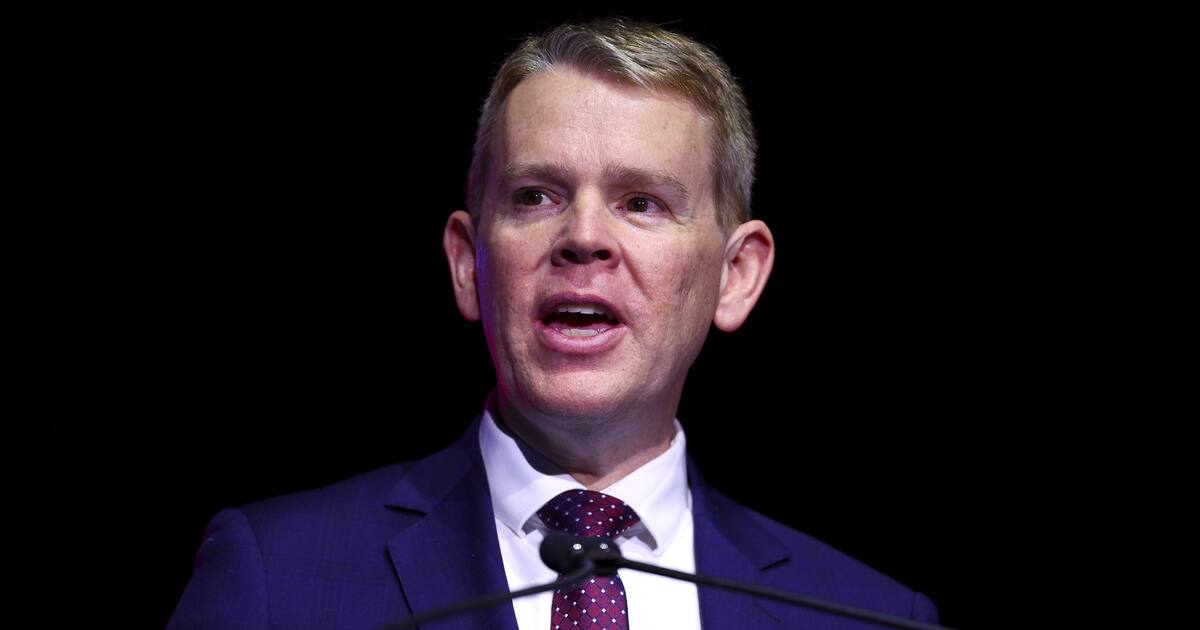
Labour leader Chris Hipkins has welcomed the new New Zealand-India Strategic Partnership while warning exporters and investors to watch a disputed investment clause in the free trade agreement closely.
Prime Minister Christopher Luxon and Indian Prime Minister Narendra Modi used the Auckland visit to lift the relationship to a Strategic Partnership and agree a Roadmap to 2030. The Government says the roadmap covers trade, investment, technology, maritime security, education, tourism, sport, agriculture and community links. Luxon said the free trade agreement is central to the plan, with a goal of doubling two-way trade by 2030 and reducing or eliminating tariffs on 95 percent of New Zealand exports to India once fully implemented.
That is the opportunity side of the story. India offers scale that New Zealand exporters rarely find in a single market: a population of about 1.4 billion people, growing middle-class demand and interest across food, education, tourism, technology and services. A lower-tariff pathway could help companies that have long seen India as attractive but difficult. The strategic partnership also deepens maritime security cooperation, giving the relationship a wider Indo-Pacific frame rather than leaving it as a trade-only exercise.
Hipkins' concern is about interpretation. He said the overall agreement was positive, but he said New Zealand businesses should be eyes wide open about India's understanding of a clause around promoting investment. Modi referred to a commitment involving NZ$34.7 billion of private investment in India over 15 years. Luxon said the agreement committed New Zealand to promote investment, not to guarantee a fixed private-investment result. Hipkins called that discrepancy important and said it could have consequences in future years.
The distinction matters because governments can encourage private investment but cannot easily command it. New Zealand firms make their own capital decisions, based on risk, returns, regulation, currency, tax, partners and market knowledge. If India sees the clause as a firmer promise than New Zealand does, future disappointment could become a diplomatic irritant. If New Zealand exporters assume the FTA alone removes all practical barriers, they may underestimate the work still needed to build distribution, compliance systems and trusted local relationships.
Hipkins also said his own conversation with Modi was warm and useful, with discussion of direct flights and opportunities for New Zealand to share knowledge, expertise and enterprise in India. That matters because the opposition is not rejecting the relationship. It is arguing for careful execution. In a country where trade policy often has broad political support, the detail can still become contentious if expectations diverge.
The next phase is implementation. Exporters will want tariff schedules, rules of origin, customs processes, aviation links, education pathways and investment guidance that are clear enough to act on. The Government will want to present the visit as a historic reset after the first visit by an Indian prime minister in 40 years. Hipkins' warning is a reminder that a major diplomatic announcement is only the start. The partnership will be judged by whether both sides understand the same obligations in the same way.