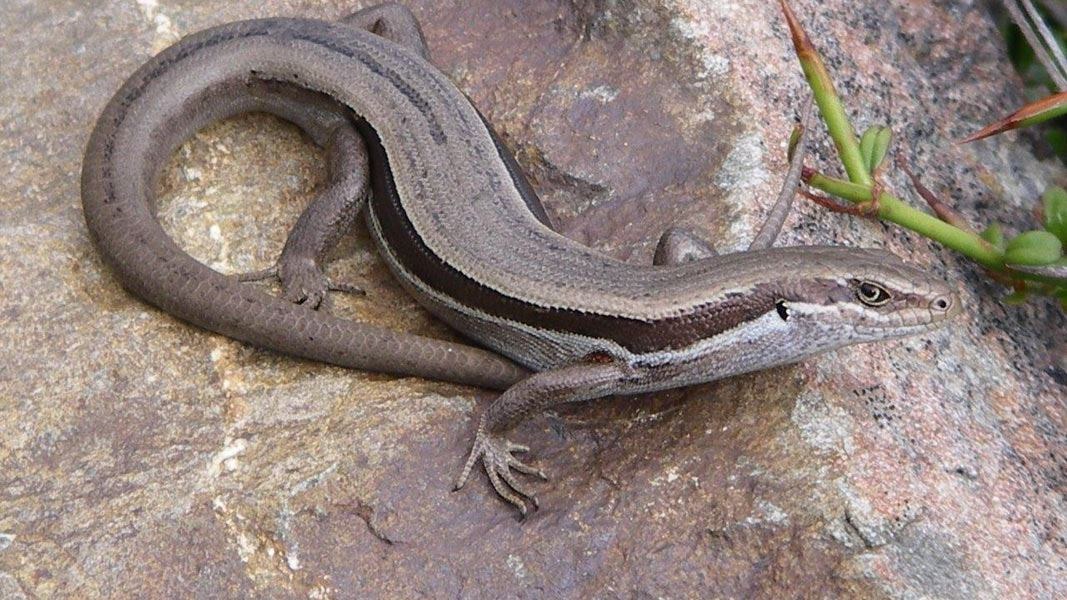
Conservation Minister Tama Potaka says funding will be used to create safe backup populations for Hamilton's frog and the white-bellied skink, two native species found nowhere else in the world and now at serious risk of extinction.
Announcements dated 4 August say both species are classified as Threatened - Nationally Critical. The plan will move 200 Hamilton's frogs into new breeding facilities at Auckland Zoo and Orana Wildlife Park. For the white-bellied skink, funding will establish a protected population at Orana Wildlife Park. Potaka said the aim is to give the species a better chance of survival for future generations.
Hamilton's frog is one of New Zealand's distinctive ancient native frogs. It is the largest native frog, growing up to 5cm, and lives in native forest rather than ponds. It does not croak, breeds on land, and male frogs guard eggs and young froglets during development. The species can live for up to 45 years. Its only remaining natural wild populations are on Te Pakaka/Maud Island and Takapourewa/Stephens Island in the Marlborough Sounds, with successful translocations also recorded at Motuara Island, Zealandia sanctuary and Nukuwaiata in the Chetwode Islands.
The survival problem is severe. The frog's main wild population has fallen by about 80 percent. For a species with such a limited natural range, that kind of decline is not just a bad season. It is a warning that one disease event, predator problem, habitat issue or weather shock could have outsized consequences. Backup populations are a form of insurance, but they are also a practical breeding base if future recovery work is to succeed.
The white-bellied skink faces a different but similarly narrow challenge. It is one of New Zealand's rarest lizards and may have fewer than 100 left in the wild. It is found in the O Tu Wharekai/Ashburton Lakes Basin in Canterbury, living in steep high-country scree. Despite decades of surveys, only three tiny wild populations have been located. Predator control is used to protect the main remaining population, and the long-term goal is to return captive-bred skinks to protected habitat within their natural range.
The new funding is therefore both urgent and cautious. Captive and protected populations can stop a species sliding closer to extinction, but they do not remove the need to protect wild habitat. For the skink, that means continuing predator control and understanding the harsh alpine scree environment where it survives. For the frog, it means maintaining predator-free island and sanctuary work, watching for disease, and learning how to breed froglets reliably enough to support recovery.
New Zealand often talks about conservation at the scale of national parks, forests and charismatic species. This announcement is a reminder that some of the country's most fragile biodiversity is small, quiet and easy to overlook. A frog that does not croak and a skink living among high-country rocks will never compete for attention with a major infrastructure project or election promise. Yet losing them would be permanent.
There is also a regional dimension. The frog story reaches into the Marlborough Sounds and established sanctuaries, while the skink story is rooted in Canterbury high country. Auckland Zoo and Orana Wildlife Park will become part of the recovery network, showing how urban conservation institutions can support species whose natural homes are elsewhere. That network approach matters because no single site can carry all the risk.
The success of the programme will not be measured quickly. Breeding, survival, predator control, genetics and eventual return to protected habitat all take time. The immediate value is that DOC, zoos and conservation partners are acting before the remaining wild populations become even smaller. In extinction prevention, waiting until a species is easier to count can mean waiting too long.