A new profile of Christchurch's Ministry of Awesome lands at a useful moment for New Zealand's start-up conversation because it points past the pitch event and into the slower work that follows.
The YesPress profile, published on 8 October, describes Ministry of Awesome as a founder-support organisation born after the Canterbury earthquakes and now serving founders across New Zealand through coaching, incubation, entrepreneur-in-residence support, community events and investor connections. Its central point is blunt: the applause at the end of a programme is not the same as building a business.
That is a healthy correction. Start-up ecosystems often know how to celebrate launches, demo days, accelerator cohorts and funding announcements. Those moments are visible and easy to photograph. The harder work is less theatrical: finding customers, testing whether anyone will pay, turning advice into weekly action, hiring carefully, managing cash and deciding when capital is actually useful.
Ministry of Awesome's origin story gives the organisation a local civic edge. The profile says Kaila Colbin, Sam Johnson, Vicki Buck and Sacha McMeeking helped establish it in 2012, after Christchurch's earthquakes, when the city was asking what it could become. Coffee and Jam gave people a place to exchange ideas. Later partnerships with Ara Institute of Canterbury and ChristchurchNZ helped formalise that founder-support infrastructure.
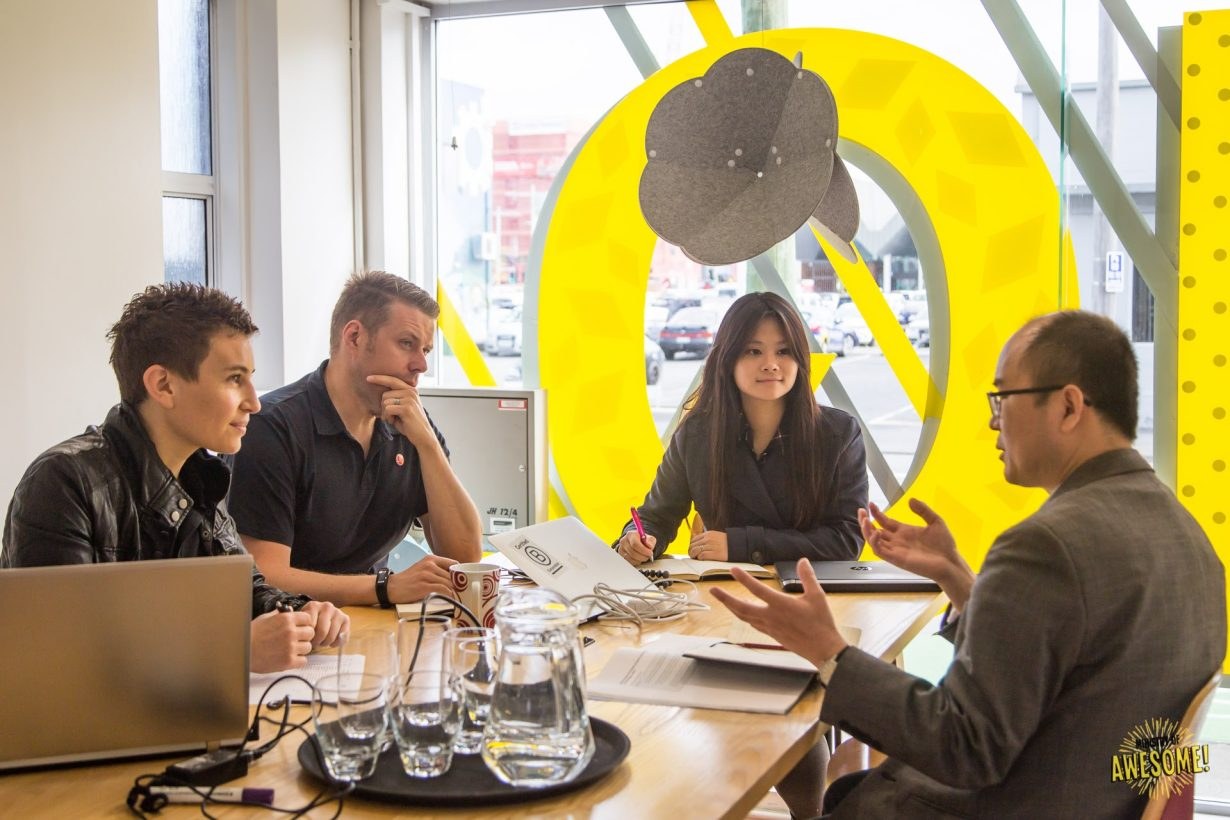
The current programme detail is more important than the origin myth. Founder Catalyst is described as a seven-month programme that charges no participation fee and assigns each start-up a dedicated entrepreneur-in-residence. The profile calls that role an honorary co-founder without an equity stake. That phrase captures the value proposition well: founders get recurring accountability and experienced judgement, but they do not have to give up ownership for access to the room.
The model is also a reminder that advice has to match a company's stage. An early founder may not need a polished investor deck. They may need to discover whether the problem is real, whether the customer is reachable and whether the first version of the product is solving the right thing. The profile points to Startup Aotearoa for free one-to-one coaching, Pre-Founder Catalyst for customer discovery and Founder Catalyst for traction and scale.
There are useful founder examples. Backkr founder Kate Radcliffe-Reid is described as finding a technical co-founder through Founder Catalyst. Airie founder Annie Kim is described as being pushed by mentor Dan Khan to focus less on polishing a product and more on building a business. Those stories are small, but they show why operator-led support matters: founders often need someone to challenge the thing they most want to keep doing.
The profile also reports Ministry of Awesome's published portfolio snapshot: 330 Founder Catalyst start-ups supported and 78 percent reported still operating. Those figures should be treated as programme data rather than proof of causation, but they do suggest the organisation is no longer a small informal network.
For New Zealand's founder economy, the practical lesson is that support after the showcase may matter more than the showcase itself. If Ministry of Awesome can keep helping founders ask better questions, test customers earlier and build accountability into the week-by-week work, it offers something more durable than start-up theatre.