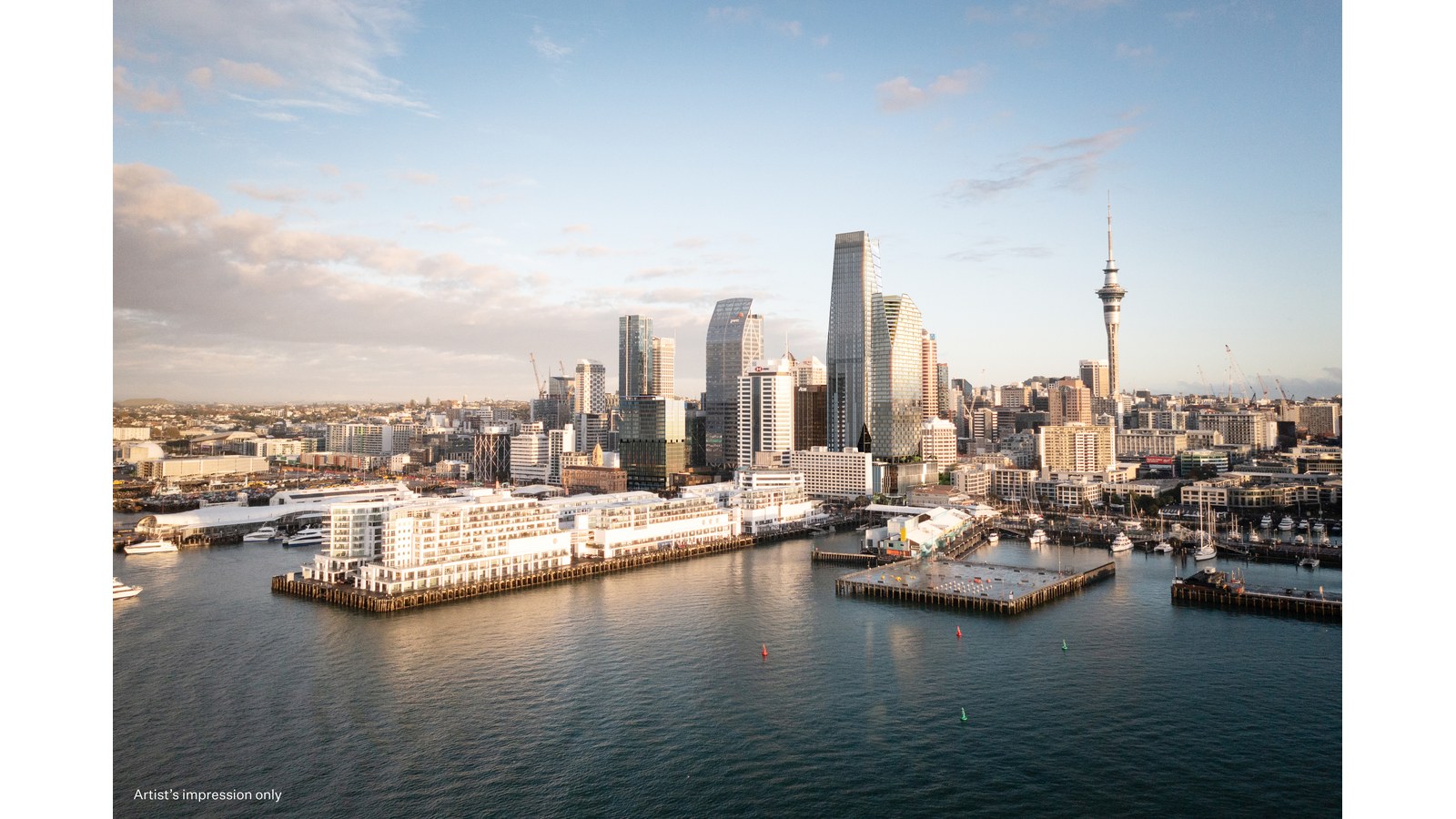
Auckland's Downtown Carpark redevelopment has been granted fast-track approval, clearing a major consenting hurdle for a waterfront project that would replace the seven-storey carpark with two towers, three podium buildings and a new laneway network.
Infrastructure Minister Chris Bishop and Regional Development Minister Shane Jones announced the approval on 5 August. The Beehive release says the project will demolish the existing carpark at the western end of Auckland's waterfront and develop an integrated mixed-use precinct. Bishop said the rebuild would include a 55-level commercial office tower, a 162-metre mixed-use residential tower, a hotel, retail and food and beverage space, public civic areas and an expanded laneway network.
The Fast-track project page confirms the decision date and says approvals were granted on 5 August 2026, subject to conditions. It describes an approximately 170,000-square-metre gross building area across commercial office, residential apartments, a hotel, retail, hospitality, civic space and a four-level basement for carparks. The listed project location covers Lower Hobson Street, Customs Street and Quay Street addresses in Auckland Central.
For Auckland property, the decision is significant because the site is one of the most visible pieces of city-centre land still defined by a transport-era use. The existing carpark sits close to Commercial Bay, the ferry terminal, the Viaduct and the waterfront's hospitality economy. Replacing it with offices, apartments, hotel rooms and public lanes would change both the skyline and the street-level experience of the area.
The approval also shows how the fast-track system is being used for major urban development. The Beehive release says Downtown Carpark is the 28th project approved through the process. It also says Precinct Properties New Zealand lodged its application in January 2026 and approval took about five months from the appointment of an independent expert panel. For developers, that timing is central to the fast-track argument: certainty and speed can determine whether projects proceed.
Conditions will matter. Bishop's release noted that issues raised during the process included traffic during construction and hotel pick-up and drop-off arrangements. Those matters are expected to be addressed through consent conditions, including traffic management plans and ongoing monitoring. For a site already sitting in a constrained downtown network, construction management will be a public-facing test of the approval.
There is also an economic development case. Jones said nearby businesses in tourism, retail and hospitality stood to benefit. That is plausible if the precinct brings more workers, residents, visitors and street activity into the western edge of the waterfront. The risk is that the construction period creates disruption before the long-term benefits arrive, especially for surrounding businesses already dealing with city-centre access and cost pressures.
Auckland Council's earlier development material described the project as part of the next stage in the revitalisation of downtown Tamaki Makaurau, and 1News reported that the council sold the building to Precinct Properties for $122 million. That sale is now moving from asset transfer into implementation, with the fast-track approval changing the story from proposal to consented project.
The next practical questions are timing, tenant demand, financing, traffic management and how much public value the laneways and civic spaces actually deliver. A large development can look persuasive in renderings, but Aucklanders will judge it by access, sunlight, ground-floor activity, construction disruption and whether the finished precinct feels genuinely public.
For now, the project is one of the clearest examples of the Government's development-speed agenda landing in a high-profile urban location. It gives Auckland a path to transform a carpark into a dense mixed-use block, while putting the fast-track process under close city-centre scrutiny.